Every change feels risky.
Outdated dependencies, tightly connected code, or limited test coverage make even small improvements difficult to ship with confidence.

Modernize your existing application without losing what makes it valuable. We help you improve what needs attention, preserve what still works, and prepare your software for what's next.
Legacy doesn't always mean obsolete. Often, it's business-critical software that still serves your team, but aging technology makes everyday work and future improvements harder.
Outdated dependencies, tightly connected code, or limited test coverage make even small improvements difficult to ship with confidence.
Your application needs to exchange information with other services, but its current architecture makes integrations difficult.
Interfaces and processes that once made sense now create extra work for staff, customers, and administrators.
Too much engineering time goes toward keeping things running instead of delivering useful improvements.
There isn't one right way to modernize an application. We start with the problem you're trying to solve, then help identify changes worth making.
Make a codebase easier to understand, maintain, and extend without changing the product's core purpose. That might mean simplifying complex logic, updating dependencies, or improving how parts of the application fit together.
For teams maintaining an older Ruby on Rails application, this can be an important step toward safer, more predictable development.
Move an existing application toward a more sustainable technical foundation while preserving important workflows and business logic. We help evaluate what should remain and what needs to change before deciding how much of the platform to move.
Infrastructure can limit an otherwise useful application. Where appropriate, modernization can include revisiting hosting, deployment processes, cloud services, and operational practices to make releases and ongoing support more manageable.
Explore our DevOps consulting services.
When the current structure makes new features or integrations unusually difficult, larger architectural changes may be worth considering. We can help weigh targeted improvements against more substantial restructuring so the scope matches the actual need.
Connect your software to the tools and services your organization uses today. We consider how information moves between systems, what existing workflows depend on, and how to introduce integrations without creating unnecessary complexity.
Modernization isn't only about the code beneath the interface. We can improve navigation, reporting, forms, and day-to-day workflows so your application better supports the people relying on it.
See how product design helps teams understand what users need before making changes.
Aging technology doesn't automatically call for a total rebuild. Our goal is to understand what's useful, identify what's holding you back, and focus the work where it matters.
Protect the workflows, knowledge, and features your team already relies on.
Prioritize the outdated dependencies, brittle code, or usability problems slowing progress.
Create a foundation for changes that support your users and business over time.
We favor informed decisions over a one-size-fits-all rewrite. The goal is to make progress while respecting the people, systems, and constraints that already exist.
Learn how the application works today, review its codebase and dependencies, and listen to the people who use and maintain it.
Identify the highest-value changes, consider technical tradeoffs, and decide what can be improved incrementally.
Make focused changes, validate critical functionality, and plan deployments around the realities of your operations.
Test critical workflows and integrations, then plan releases around your operational needs to reduce the risk of disruption.
Continue maintaining, refining, and extending the application as business requirements and user needs evolve.
Address bottlenecks and technical limitations that make an application less responsive or harder to support as usage grows.
Update aging dependencies and simplify difficult code so ongoing maintenance takes less effort. Savings depend on the system and scope of work.
Review unsupported components, outdated dependencies, and security risks as part of a practical modernization plan.
Give developers a more maintainable foundation for improving features, integrating services, and responding to changing user needs.
An established application holds years of decisions, workflows, and business knowledge. Replacing it all can be disruptive, and it isn't always necessary.
SmartLogic evaluates what should stay, what needs attention, and which changes can happen incrementally. A Ruby on Rails modernization project offers a practical example of that approach.
Read about a Ruby on Rails modernization project →SmartLogic first partnered with Folio Collaborative in 2011 to build myFolio. We have continued improving the platform together as the organization's needs have evolved. The platform helps independent schools manage educator goals, observations, feedback, and professional development.
Recent work has included redesigned surveys, a more useful reporting dashboard, customizable templates, and subscription-tier functionality. It's an example of how an established product can continue changing alongside its users.
Explore our Folio Collaborative work →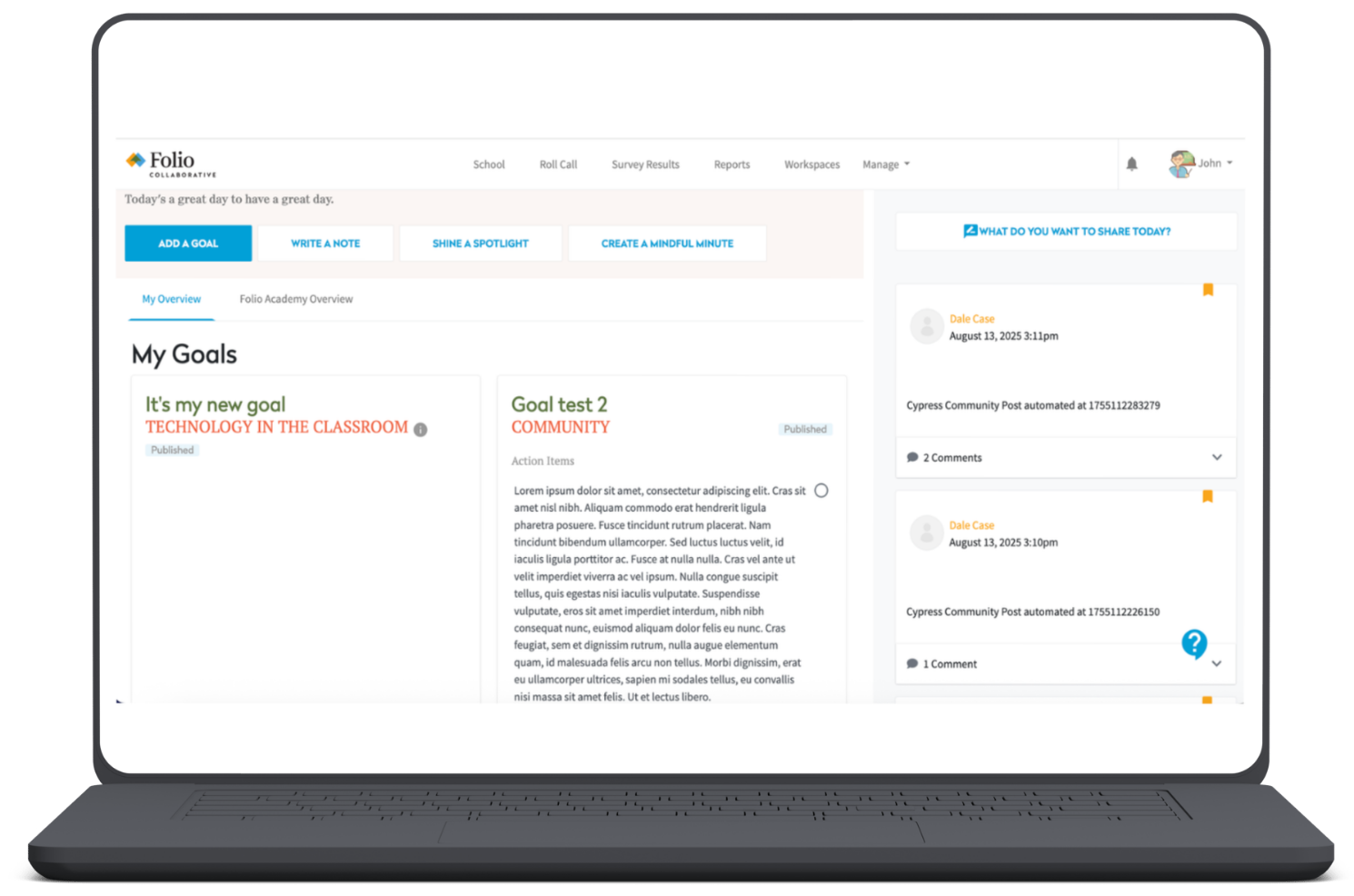
Modernizing an existing application takes more than technical knowledge. It takes curiosity about why the software works the way it does, an understanding of what your organization needs next, and the judgment to recommend changes that make sense.
SmartLogic has been building software since 2005. We work directly with client teams, ask questions, communicate tradeoffs, and continue supporting applications well beyond their initial launch.
Good modernization work can make an application easier to maintain, improve its user experience, support new integrations, and create more room for future development. What matters most depends on where your system is today.
Explore our software development services →“SmartLogic is the kind of company that you're looking for when you want someone to be in the trenches with you and try and fully understand what it is you're doing and then build alongside you.”
— Jess Wilson, Folio Collaborative
From deciding whether to modernize to estimating scope, here are some of the questions teams ask about working with an established application.
Legacy application modernization is the process of improving an existing software system so it can better meet current technical and business needs. That might involve refactoring code, updating frameworks, changing infrastructure, improving the user experience, or introducing integrations. It doesn't always require replacing the entire application.
An application can still serve users while becoming increasingly difficult or expensive to maintain. Modernization can address outdated dependencies, technical debt, integration limitations, and usability problems before they prevent useful changes or create larger operational issues.
It's worth evaluating when routine changes are taking too long, important dependencies are outdated, the application struggles to support new requirements, or users are working around limitations. An assessment can help distinguish urgent risks from improvements that can happen gradually.
Common approaches include refactoring existing code, replatforming parts of an application, changing its architecture, updating infrastructure, improving interfaces, and connecting it to modern services. The appropriate choice depends on the application's condition, business priorities, available resources, and tolerance for disruption.
Not necessarily. Many applications can be improved through targeted upgrades and incremental changes. A complete rebuild may be appropriate in some situations, but it's a significant decision that should follow a careful review of the existing system and the outcomes you need.
It depends on the condition and complexity of the codebase, how much is changing, and what needs to stay operational throughout the work. A focused improvement can be smaller in scope than a multi-phase architecture or infrastructure project. We work with you to establish priorities and plan an appropriate sequence.
Costs depend on the application's size, technical condition, test coverage, integrations, and the modernization goals. Rather than assuming every application needs a complete rebuild, we start by understanding what matters and help prioritize work around your constraints and budget.
You don't need to arrive with a modernization plan. Tell us what your software does, what's no longer working well, and what you'd like to make possible. We'll talk through where to start.
Start a conversation →