
Clean Swell Mobile App
SmartLogic partnered with Ocean Conservancy to maintain and expand the Clean Swell mobile app, a tool for tracking volunteer cleanup data and promoting community engagement in ocean conservation efforts.
Ocean Conservancy is a Washington, D.C.-based non-profit dedicated to protecting the ocean through science-based advocacy, policy development, and community action.
One of the organization’s most visible and enduring programs is the International Coastal Cleanup® (ICC), an effort launched in 1986 that now operates through a network of partners worldwide. Today, the Clean Swell® mobile app connects these cleanups and serves as a primary data collection tool.
With Clean Swell, volunteers around the world collect trash from beaches and waterways, log what they find, and contribute that information to a growing global dataset. That data informs research, shapes policy conversations, and supports long-term efforts to reduce plastic pollution.
Clean Swell is often a point of introduction to Ocean Conservancy, connecting volunteers to cleanup efforts and the organization’s broader mission. The app increases participation and visibility while also improving the quality of data collected for the central database. This documentation provides the evidence needed for environmental research, reporting, and policy efforts.
Ocean Conservancy partnered with SmartLogic to improve the app’s user experience and long-term maintainability. These enhancements allow volunteers to log cleanups more easily and accurately in the field and refine the quality and consistency of data flowing into the central database.
Project Highlights
- Modernized a React Native codebase and upgraded outdated dependencies to restore stability and support ongoing releases.
- Finished and launched the Trash Trap data collection flow after inheriting unfinished work from a previous vendor.
- Stabilized offline functionality, enabling volunteers to log cleanups in areas with unreliable connectivity and submit data once back online.
- Expanded multilingual support to better serve global cleanup efforts.
- Strengthened security between the mobile app and backend systems through coordinated API hardening.
- Took over the Node-based API server from a third-party partner, reducing coordination overhead and improving development efficiency.
Project Goals
The Clean Swell app is a tool that lets people take direct action in support of Ocean Conservancy’s mission. While removing trash from waterways, participants also collect data to inform future efforts and policies.
At a high level, the project goals are to:
- Support volunteers in the field with a user-friendly reporting platform.
- Increase submission accuracy to ensure data is consistent and useful for research and reporting.
- Improve the reliability and maintainability of the platform to support ongoing use and future enhancements.
- Improve scalability so the platform can continue evolving without accumulating preventable technical debt.
From Rivers to Researchers: How It Works
Volunteers in the Field
The International Coastal Cleanup operates through a global partnership network of over 500 organizations across approximately 120 countries. Local partner organizations host cleanups, introduce volunteers to the Clean Swell app, and use it to document the trash collected on their shorelines.
To support their global efforts and ensure that volunteers worldwide can participate, the Clean Swell app has multilingual options in over a dozen languages. The app also reflects the local nature of the work. Volunteers often see the branding of their local cleanup or environmental organization within the app. These features reinforce the importance of individual action and how it connects local environmental stewardship to the larger global movement.
One of the Clean Swell app’s most empowering features is accessibility. Volunteers don’t need to participate in a large, organized event to contribute. Even an individual cleanup conducted alone or with family can be recorded and incorporated into the larger global database. This reinforces that individual action matters and contributes to the broader international mission.
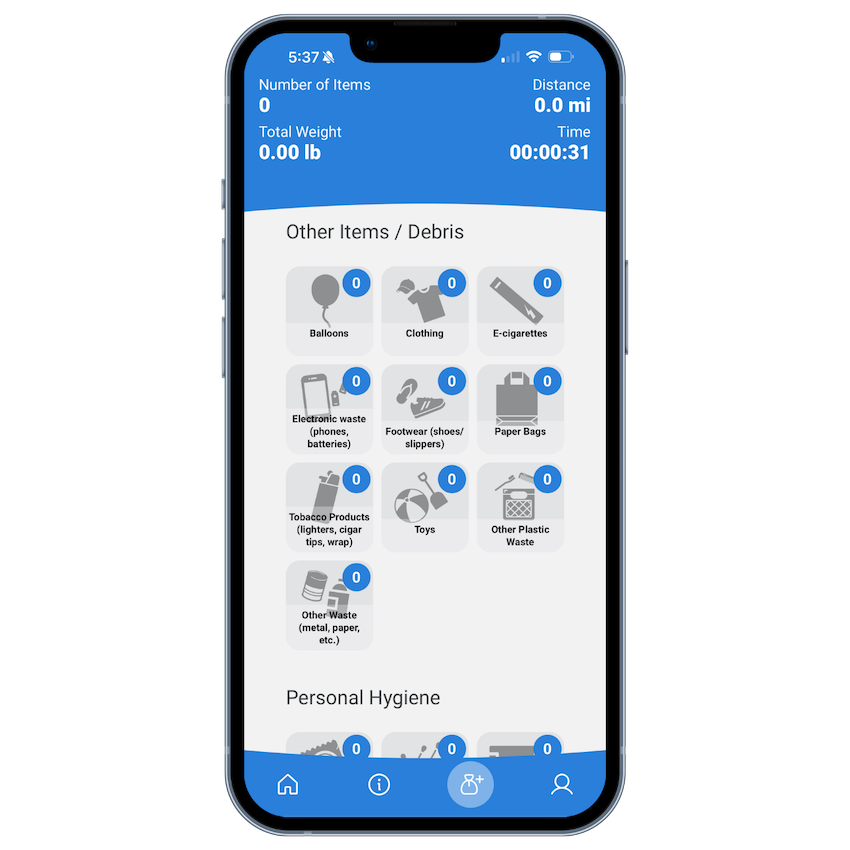
During a cleanup effort, logging includes:
- Cleanup date and location
- Time spent and distance covered
- Type and quantity of debris collected
The app includes gamification elements to increase volunteer engagement. Volunteers earn badges for participation, including limited-time badges for special campaigns (e.g., Shark Week or the annual International Coastal Cleanup initiative). SmartLogic improved badge visibility to enhance the reward moment for the user.
Trash Trap Reporting
Trash traps are waste collection devices that filter litter out of waterways. The trash trapping network increases the impact of Ocean Conservancy’s international cleanup efforts with continuous waste removal.
When partners service these devices to remove collected debris, they can report the information to the Clean Swell app. The reporting for these devices is tailored within the app to accommodate the larger quantity of trash collected with sampling-based estimates.
Data Flow and the TIDES Database
Once a user logs and submits a cleanup or collection, the app sends the data to Ocean Conservancy’s central data system, TIDES (Trash Information and Data for Education and Solutions), where it is aggregated and made available for reporting and research through downloadable exports.
The data collected through Clean Swell contributes to Ocean Conservancy’s broader research and policy efforts, helping inform conversations around plastic pollution at local, state, and national levels. These insights support initiatives aimed at reducing single-use plastics, including efforts like the Farewell to Foam Act, which targets foam container pollution to protect environmental and public health.
Technical Collaboration
Ocean Conservancy partnered with SmartLogic to take over the Clean Swell app when the previous vendor was no longer available to support the project. The team inherited a codebase where critical dependencies, including React Native, were significantly outdated.
Before new feature work could begin, SmartLogic’s first step was to stabilize the foundation: upgrading React Native, updating third-party dependencies, and addressing breaking changes in the libraries. This critical step stabilized development, enabling the team to improve existing features and build new ones.
SmartLogic expanded support beyond the mobile app by taking on the Node-based API server used by the application. This allows for tighter coordination across app and backend changes, improving delivery efficiency.
Challenges and Solutions
Going Off-Grid: Reliable Logging without Reliable Internet
Cleanups are an outdoor activity. Often, the areas where volunteers are participating in a cleanup effort have weak connectivity. But the data still needs to be captured and logged into the database. To address asynchronous reporting, SmartLogic improved offline support so volunteers can record cleanup data in the moment and automatically submit it once connectivity is restored.
Strengthening App Security and API Integrity
As the app evolved, SmartLogic worked in collaboration with the Allegiance Team to strengthen safeguards and fortify protective layers between the app and the backend systems. Together, the teams coordinated security and API-hardening efforts across the boundary to reinforce safe, consistent communication without disrupting the user experience.
Modernization Without Disruption
When SmartLogic inherited the project, the app was relying on an outdated React Native version and aging dependencies, making it difficult to maintain and release software updates. The SmartLogic team modernized the foundation and established an ongoing upgrade schedule to keep dependencies current, maintain stability, and support sustainable development over time.
Collaborative Problem-Solving
Ocean Conservancy’s Allison Schutes highlighted SmartLogic’s flexibility and solution-oriented approach as a key strength of the partnership.
“I’ll bring a problem or an idea to the table, and it’s rarely met with ‘that’s a non-starter.’ It’s usually, ‘That’s interesting! Let’s explore it and come back with options.’ That’s incredibly helpful.”—Allison Schutes, Senior Director of Conservation Cleanups, Ocean Conservancy
This collaborative mindset enables Ocean Conservancy to explore new opportunities, from enhanced reporting features to campaign activations like Shark Week, without limiting creative thinking. Knowing there’s a responsive technical partner behind the app allows the team to confidently propose new ideas to nonprofit partners and financial supporters.
SmartLogic values opportunities to build software that supports mission-driven organizations. The team highlighted the mission’s alignment and the real-world benefits of the Clean Swell project. SmartLogic staff engineer Stephen Chudleigh said, “It’s an honor and a privilege to work on an application that supports a cleaner environment and makes a positive impact on the world.”
Outcome
Clean Swell continues to support Ocean Conservancy’s global cleanup efforts by making volunteer action measurable and usable. Early value delivered includes:
- A modernized, maintainable mobile platform that supports consistent updates
- Improved volunteer usability through simplified reporting and offline logging
- Increased engagement through clearer badge rewards and campaign support
- Expanded translation support for international cleanups
- Greater efficiency and improved security through SmartLogic’s support of the backend API server
Through SmartLogic’s modernization and collaborative support, Clean Swell now operates on a sturdier technical foundation, positioned to connect a global network of partners, volunteers, and activists as they continue to scale in the future.